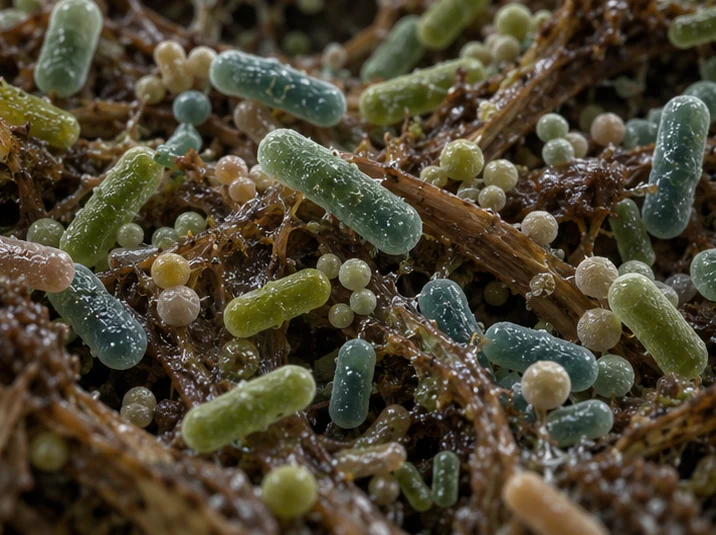
The engines of decomposition
Bacteria
Their enzymes break down organic matter, while respiration releases heat. Different bacterial communities dominate as temperature changes.

From invisible organisms to living soil: the science of compost, practical methods and the microbiology behind the process.
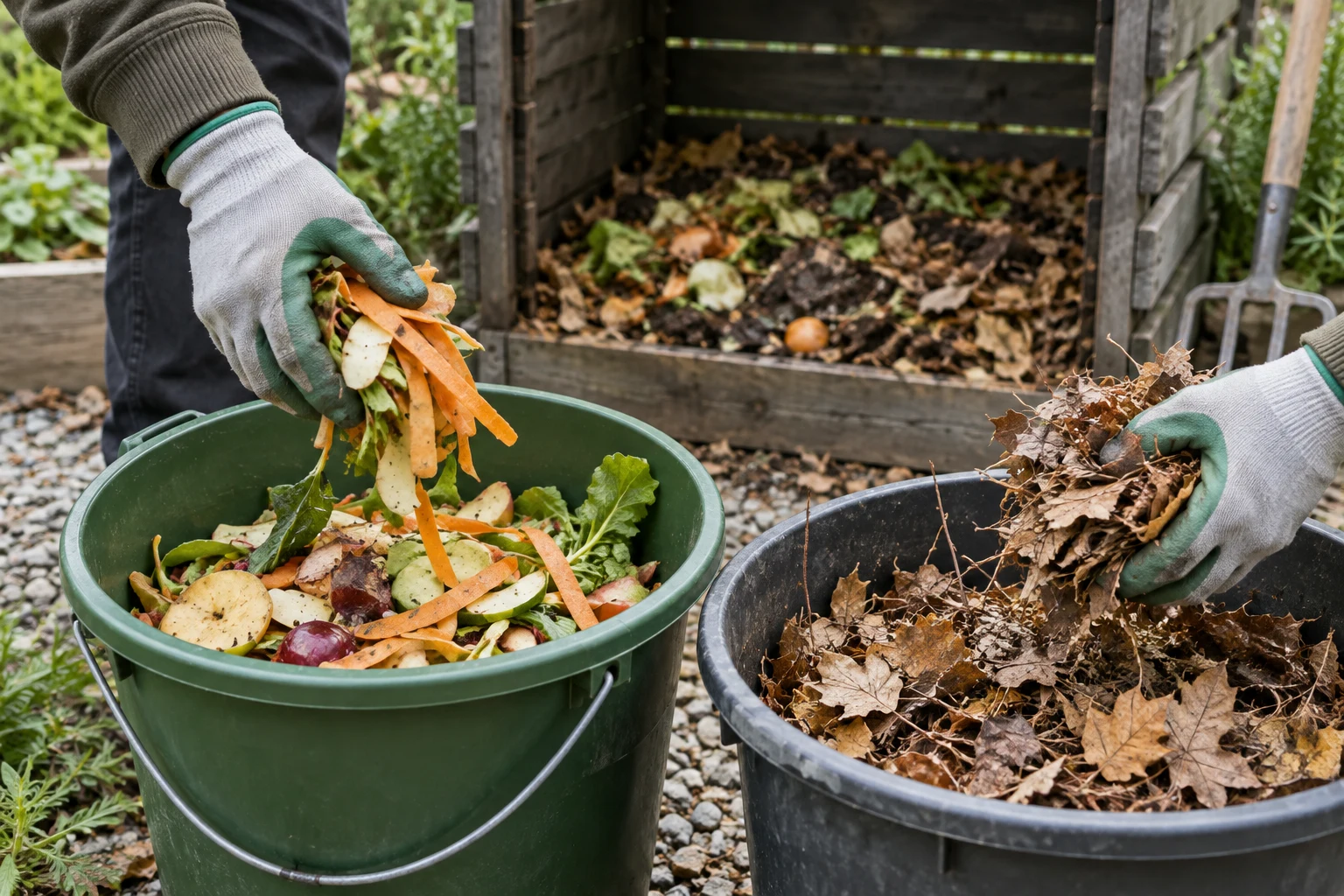
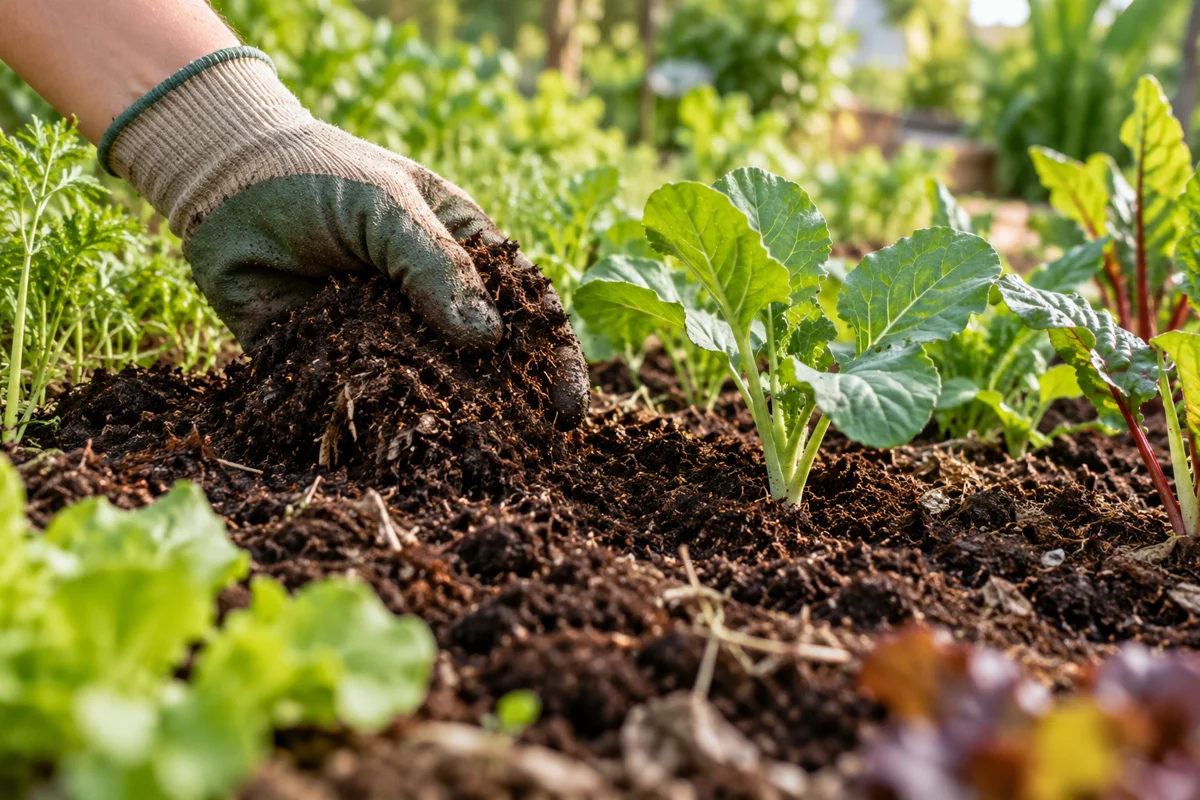
Compost is a soil amendment produced as microorganisms decompose suitable organic material in aerobic conditions.
The purpose extends beyond reducing waste volume: managing transformation produces material that can return to soil. Separation at source is the first quality checkpoint.
Source: EPA ↗Transformation depends on communities working together. Bacteria, fungi and other microorganisms break down organic material to create this living ecosystem.
Their enzymes break down organic matter, while respiration releases heat. Different bacterial communities dominate as temperature changes.
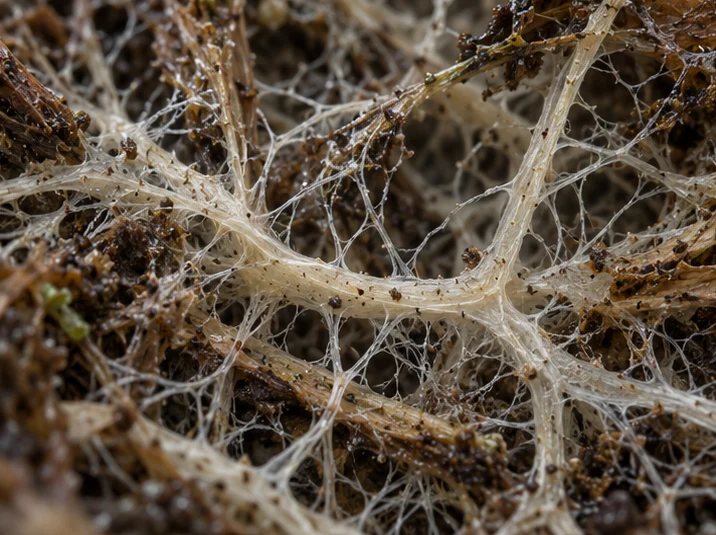
Thread-like hyphae spread through plant residues and help break down plant components that resist decomposition.
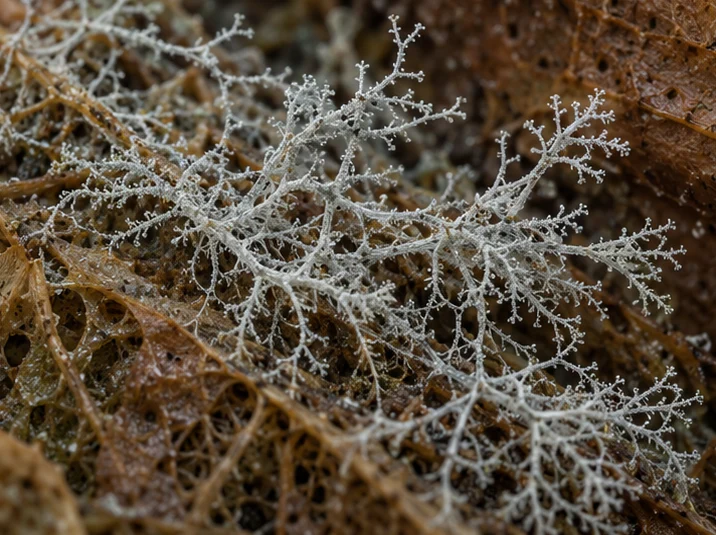
These bacteria form fine branching filaments. They help decompose woody residues and contribute to the earthy smell of compost.
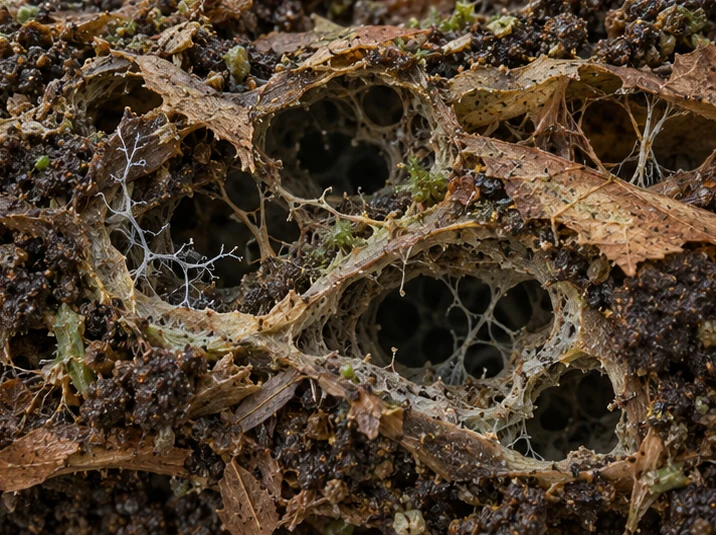
Water films on particles provide moisture for microorganisms. Spaces between them allow oxygen to enter. Compaction or excessive wetness disrupts this balance.
Source: Cornell / Compost Moisture ↗Readily available compounds decompose; heat from microbial respiration accumulates.
Heat-adapted communities become active. Aeration manages oxygen and temperature together. Hotter is not always better.
As readily degradable material declines, heat production falls. Organisms suited to cooler conditions become active again.
Transformation continues more slowly. A lower temperature alone does not mean compost is ready to use.
Phases overlap. New inputs, mixing and temperature differences within a pile can change the pattern. Monitoring means reading changes over time rather than relying on one measurement.
Source: Cornell / Temperature Monitoring ↗ Source: Cornell / Compost Physics ↗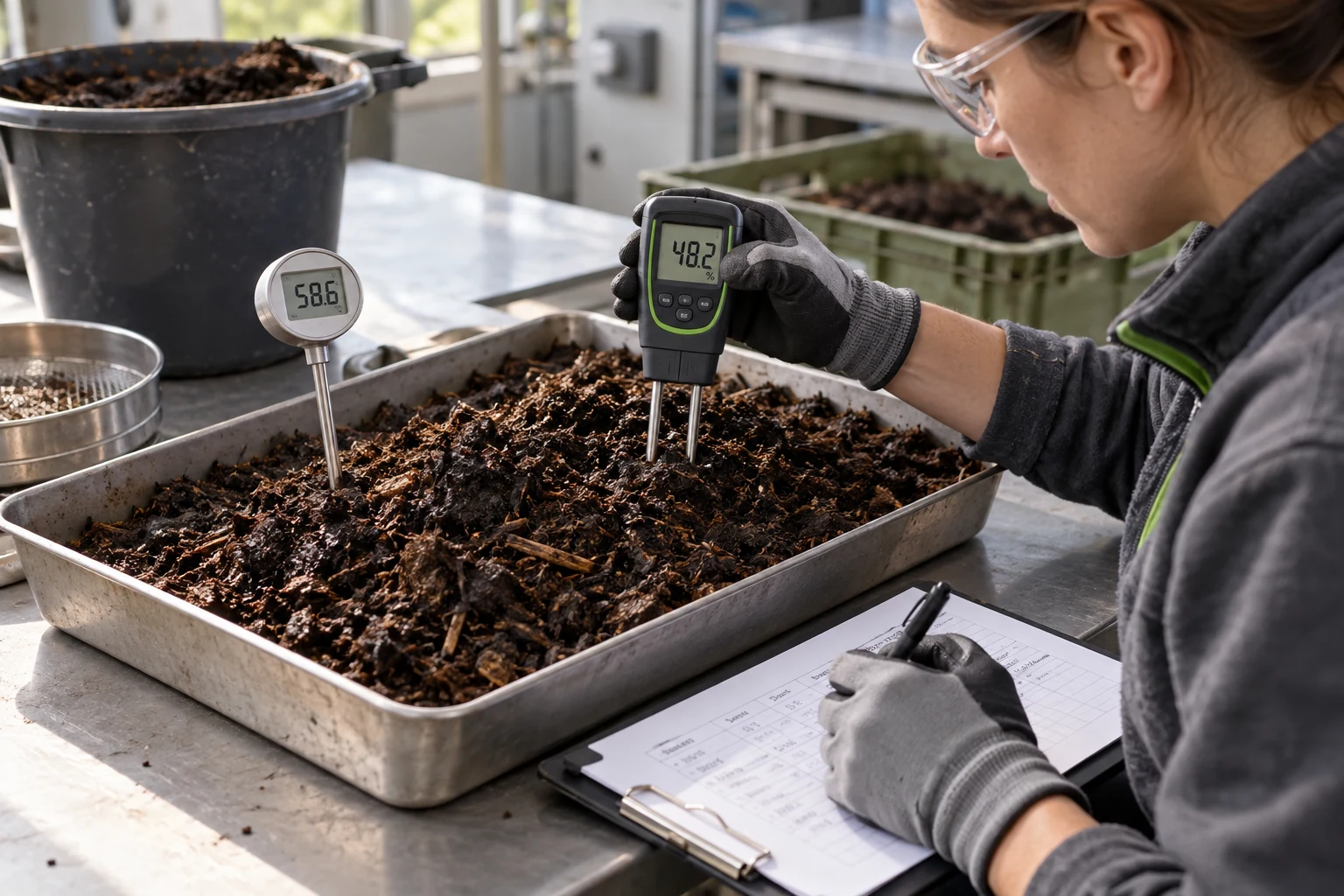
Carbon supplies energy; nitrogen supports cell growth. Around 30:1 C/N is a common starting target, not a volumetric mixing recipe.
Air moves between particles. Excessively fine grinding or compaction reduces these spaces. Structural material and suitable mixing support airflow.
Microorganisms need water. A general starting range is 40–60% moisture; the suitable value depends on feedstock and system. Saturation displaces air.
These values are general educational guidance, not machine settings or a fixed recipe for every feedstock.
Source: Cornell / Compost Chemistry ↗ Source: Cornell / Compost Physics ↗ Source: Cornell / Compost Moisture ↗Fruit and vegetable scraps, coffee grounds, tea leaves, dry leaves and clean plant residues. Remove packaging first.
Meat, dairy, oily food and compostable packaging are not automatically suitable for home piles. Follow the operator’s acceptance list.
Plastic, glass, metal, chemicals and treated wood. Keep pet waste and diseased plants out of home compost.
Waste volume, accepted materials, space, odor management and operations determine the method. Composting is aerobic; it is a different technology from anaerobic biogas production.
Small-scale transformation on site. Mixing, moisture and regular care matter.
Turned windrows or static piles supplied with air. Space and operating conditions shape the choice.
Enclosed processing enables control. Capacity, accepted materials and curing steps must be assessed for each system.
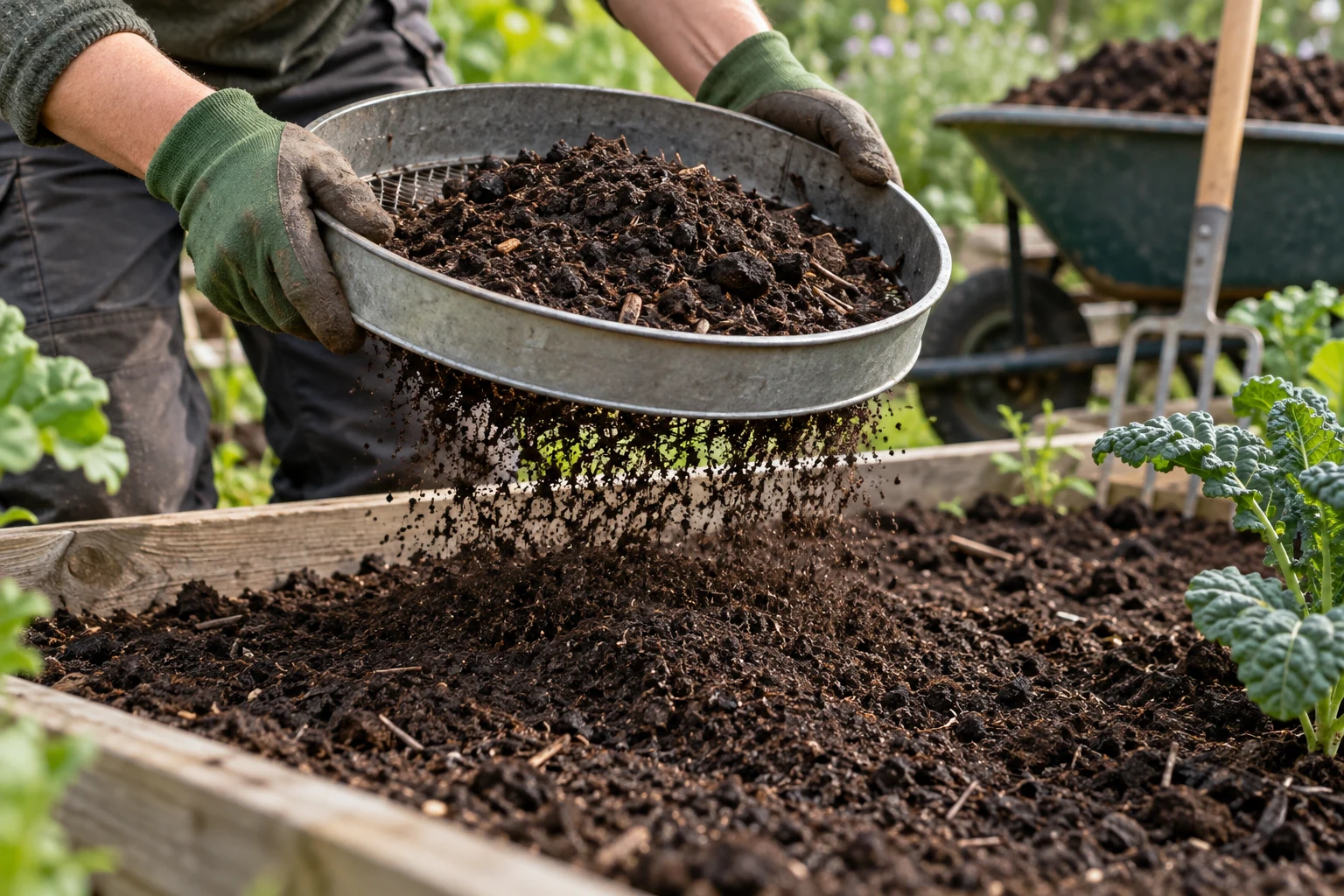
Stability describes resistance to further decomposition; maturity describes suitability for a particular use. Dark color, earthy smell and low temperature are useful observations, but do not prove quality alone.
Laboratory assessment can examine respiration/stability, plant growth or germination, pH, salinity and nutrient content. C/N ratio alone is not a reliable maturity indicator.
Source: Oregon State University / Compost Analyses ↗Compost can add organic matter to garden, landscape and agricultural soils. Choose rates using analysis and plant needs. Excess can also cause problems; pure compost is not a suitable growing medium for every plant.
Source: Oregon State University / Using Compost ↗Symptoms are starting clues. A symptom may have several causes, so assess conditions together.
| Symptom | Possible cause | First check |
|---|---|---|
| Strong / rotten smell | Excess water, compaction or poor airflow. | Check moisture and airflow; loosen the mix with suitable dry structural material. |
| Ammonia smell | An unbalanced nitrogen-rich mix. | Review carbon-rich inputs and feeding balance. |
| Slow decomposition | Dryness, poor nutrient balance or large pieces. | Check moisture, mixture and particle size together. |
| No temperature rise | Small volume, unsuitable balance or a completed active phase. | Consider feeding history and other conditions, not temperature alone. |
There is no single duration. Feedstock, particle size, air, moisture and operation matter. Assess active processing and curing together.
Grinding and drying alone do not replace biological curing. Their output may be preprocessed organic material rather than finished compost.
No. These terms describe nitrogen-rich and carbon-rich inputs. Dark coffee grounds belong to the nitrogen-rich group.
Compost mainly adds organic matter and improves soil properties. Nutrient content varies; it should not be assumed to meet every crop nutrition requirement.
Let’s assess your daily waste volume, feedstock and operations together. Explore our machines or our flexible compost facility concept for larger scales.