
Quick answer
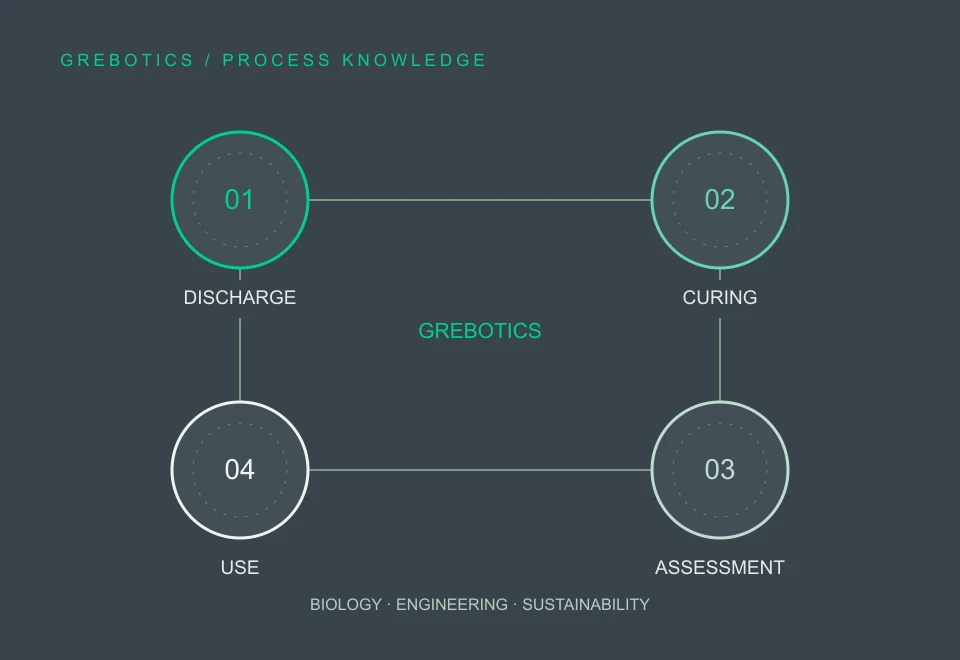
Active composting time differs from readiness of mature material for use. Intended use and output characteristics determine curing and quality assessment requirements.
Planning after discharge
Identify storage, batch identity and intended use after discharge. Separate raw waste from output areas to improve operational tracking. Consider curing area capacity when selecting equipment.
Is appearance enough?
Colour, texture and odour are field observations, not proof of suitability for all uses. Visible packaging or contaminants indicate that the separation system needs review.
The machine’s active conversion stage ↗Assigning quality responsibility
Plan analysis and technical assessment around the intended use of the output. External analysis can be arranged where needed; the checks depend on the output, site and application.
Use and traceability
Select application quantities according to the relevant technical assessment. Recording batch, date and use location supports feedback. Compost is not universally a standalone growing medium or a replacement for a standard mineral fertiliser.
Practical checklist
- Separate active time from readiness for use.
- Record batches and use locations.
- Plan the curing area before installation.
Sources and scope
These references support general compost science. GreBotics-specific features are identified as product information.