Intake container
Organic material is loaded in the first container. Reception and feeding are planned within this module to deliver material to the shredder in a controlled way.

We are here to help you establish classic or AI-controlled modern compost facilities. Together, we assess your feedstock, capacity needs and site conditions to plan the right approach.
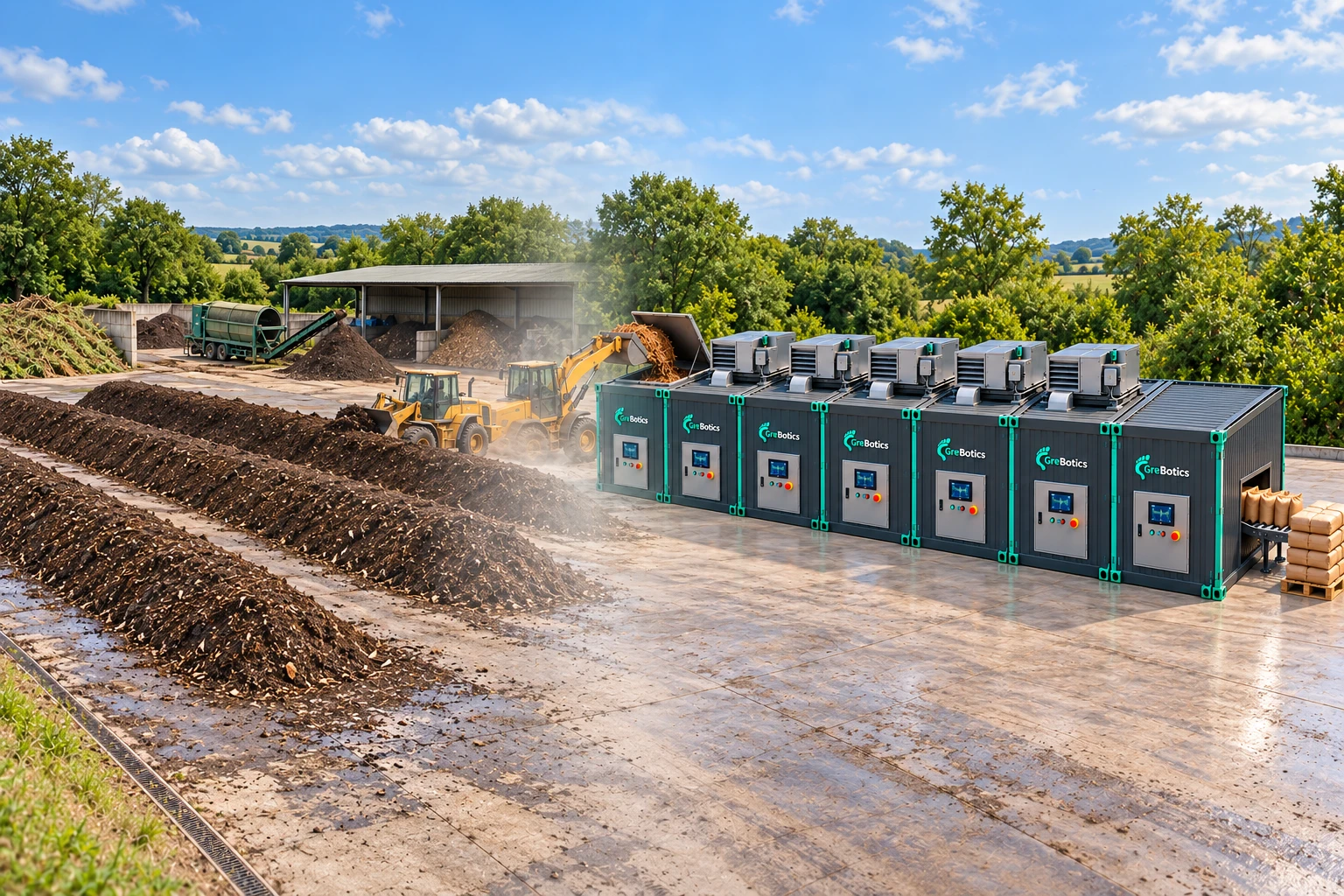
Explore classic outdoor and modern enclosed modular solutions for a new facility or an existing operation. Plan the entire site, from reception and maturation to screening and dispatch.
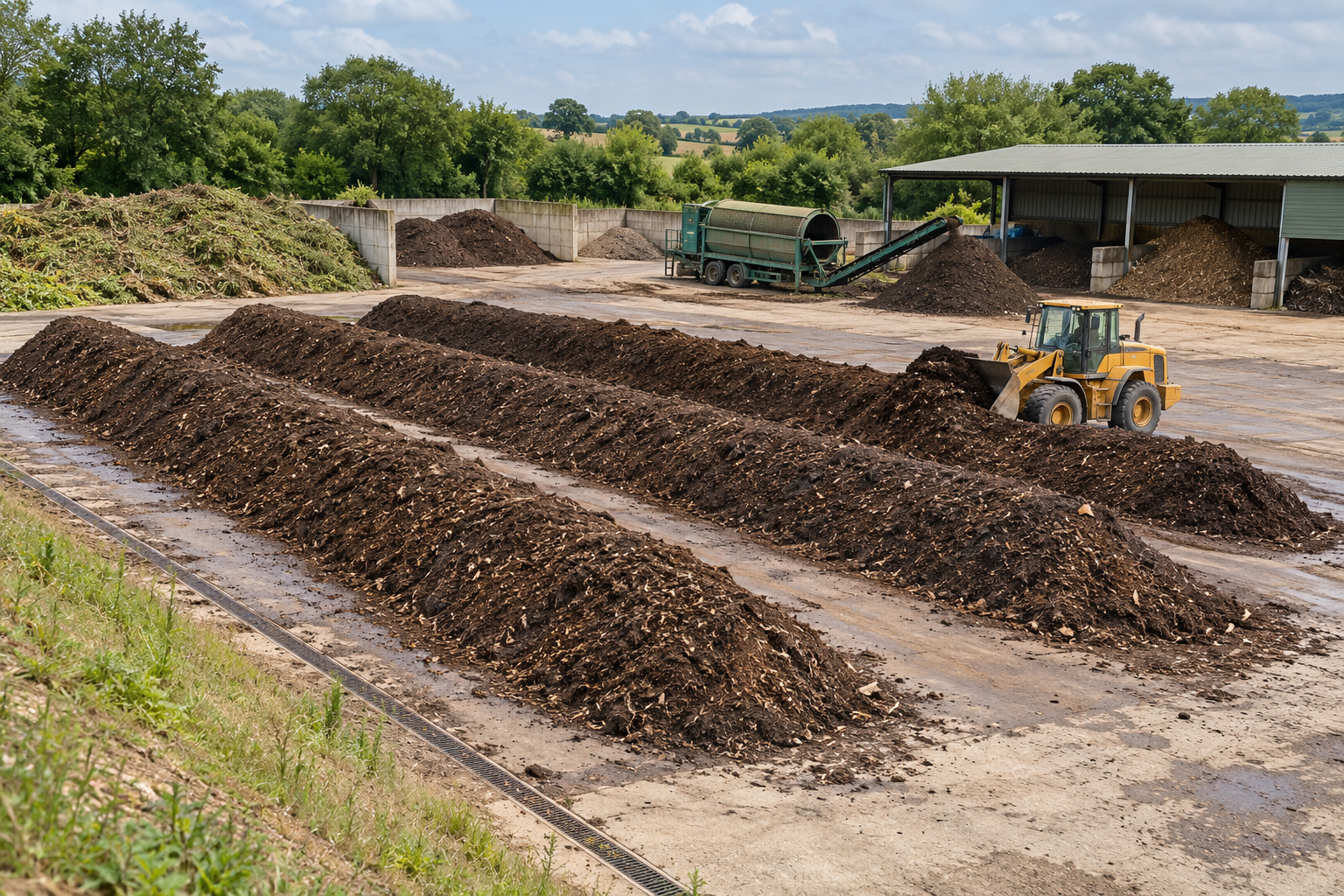
Organic material is sorted and prepared at reception, then arranged in long outdoor compost rows. Turning with a loader or suitable equipment, alongside moisture and temperature monitoring, helps manage the biological process.
Maturation, screening and finished-product storage follow the operating flow. We consider paving, drainage, leachate collection, vehicle routes and odour management from the start, planning equipment and layout around the available space.
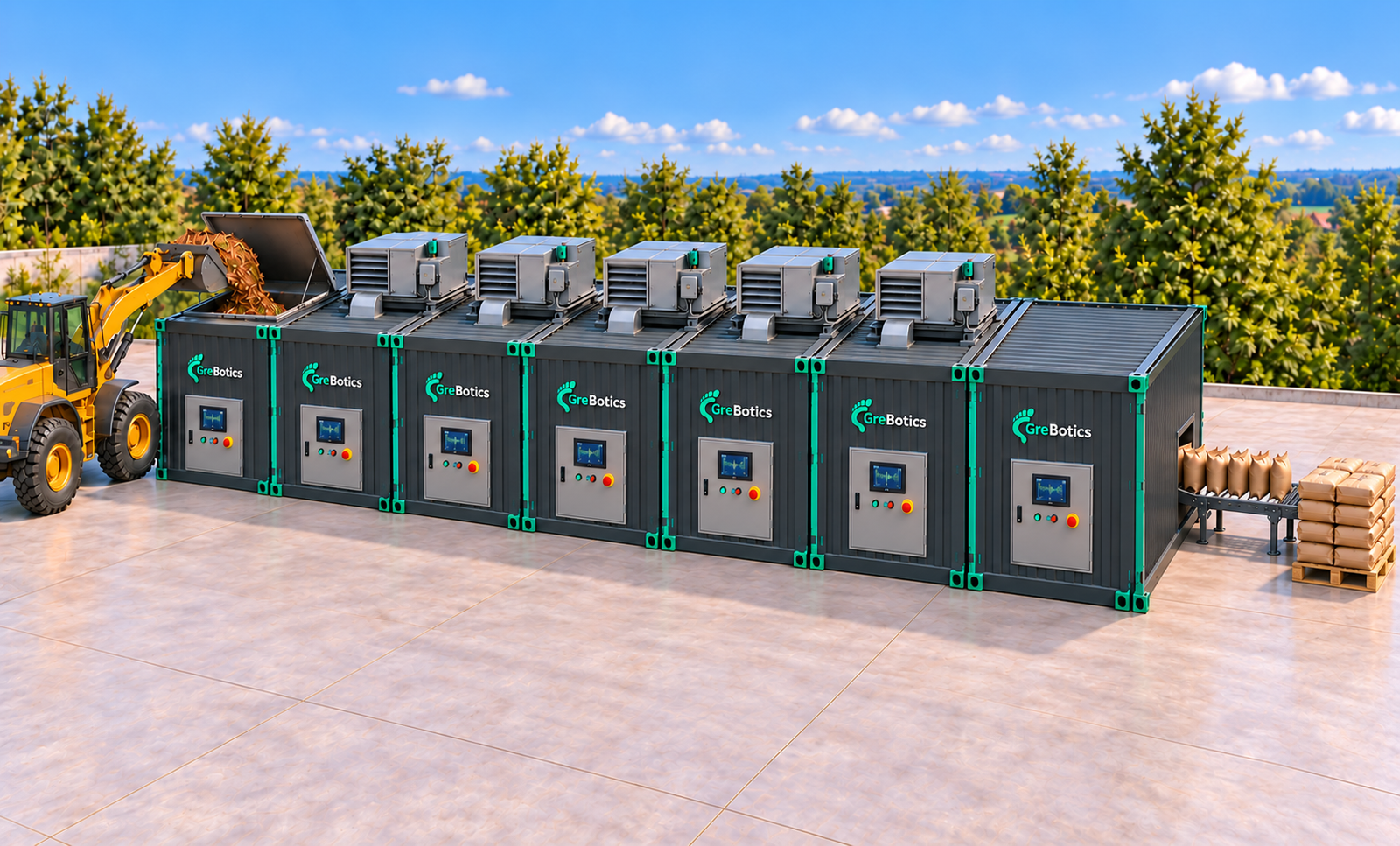
Container-shaped modules joined along their long sides form one connected line. A loader feeds material through an opening hatch in the first module; internal conveyors carry it to the shredder and from its collection bin into the compost chambers.
Each compost container is itself a processing chamber, with its own industrial ventilation and climate-control system and a front-mounted automation panel. Sensor data supports monitoring, while AI-assisted control is developed through pilot studies.
Discharge and packing take place in the final module. Packed products leave through the rear side outlet for palletising and dispatch. Chamber count and module dimensions are designed around your requirements.
Processes in windrow compost facilities can extend to around six months depending on feedstock and site conditions. We accelerate transformation while preserving natural biological methods, optimising bacterial life cycles by managing temperature, moisture, oxygen and mixing together.
In our modern enclosed facility concept, separately monitoring and controlling each chamber aims to bring active composting down to days. The same biological optimisation approach underpins our compost machines.
These times refer to the active composting stage. Necessary maturation, stability and quality assessment are planned separately for the material and its intended use.
Intake and shredding share one container. A conveyor feeds the compost chambers; output is discharged and packed in the final container. Each module has a defined role in this connected workflow.
Example layout: 1 intake + 5 enclosed compost chambers + 1 discharge and packing module. Chamber count and dimensions are defined for each project.
Organic material is loaded in the first container. Reception and feeding are planned within this module to deliver material to the shredder in a controlled way.
The shredder inside the intake container prepares material for transfer to compost chambers. Loading, shredding and transfer are designed to work together.
Shredded material travels by conveyor to the compost chamber in the adjacent container. With multiple chambers, the feeding line is planned to direct material to the selected chamber.
The compost container body itself forms the processing chamber; it does not house a separate tank. Chamber count grows with requirements, while filling, composting and discharge status are tracked for each batch.
Processed material is received in the final discharge and packing container. Transfer from the chambers to this module is engineered around the layout and operating flow.
In the final container, output is prepared and packed. Collection and dispatch are arranged at its exit, with intended use and quality assessment considered together.
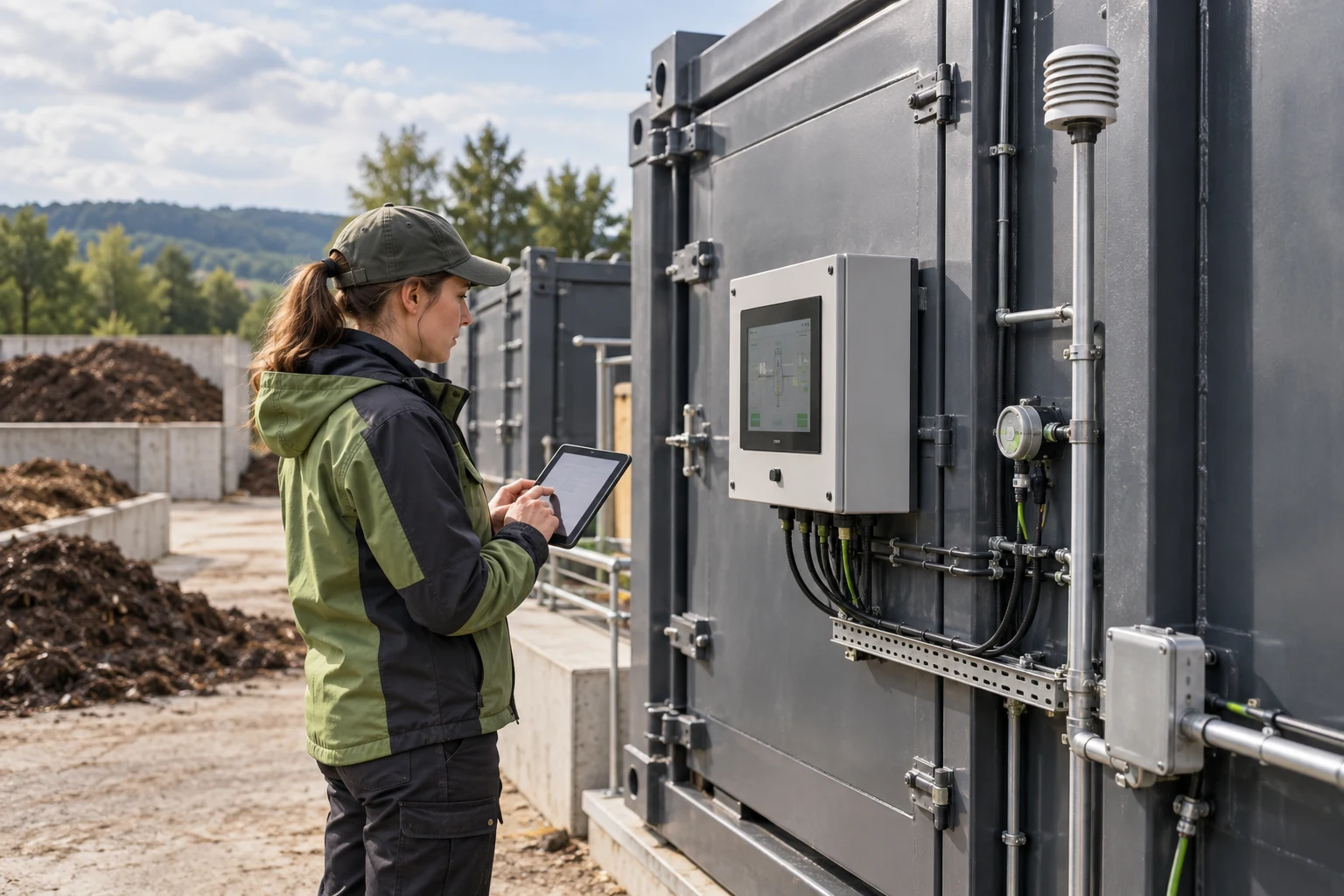
Conditions are reassessed as material changes. Our AI concept aims to interpret site data, reveal trends and support timely operator decisions.
We aim to monitor temperature, moisture and aeration alongside equipment status and batch records. Measurement points are selected for the facility’s process.
Our goal is to use data trends to recommend aeration, mixing and monitoring actions to operators. Recommendations are validated using site data and pilot studies.
Validated control scenarios are considered for automation alongside alarms, operator approval and safe operating limits. The AI layer supports operational control.
Vehicle reception, loading, operator access and maintenance routes affect daily operations. Incoming and finished material movement, holding areas and dispatch share one layout.
Odour management, ventilation, drainage and leachate collection are assessed against feedstock, process and site conditions. Power, water and maintenance access are considered from the start.
Output use is also part of the plan. Chamber processing and maturation monitoring, quality checks, packing arrangements and intended use are defined together.
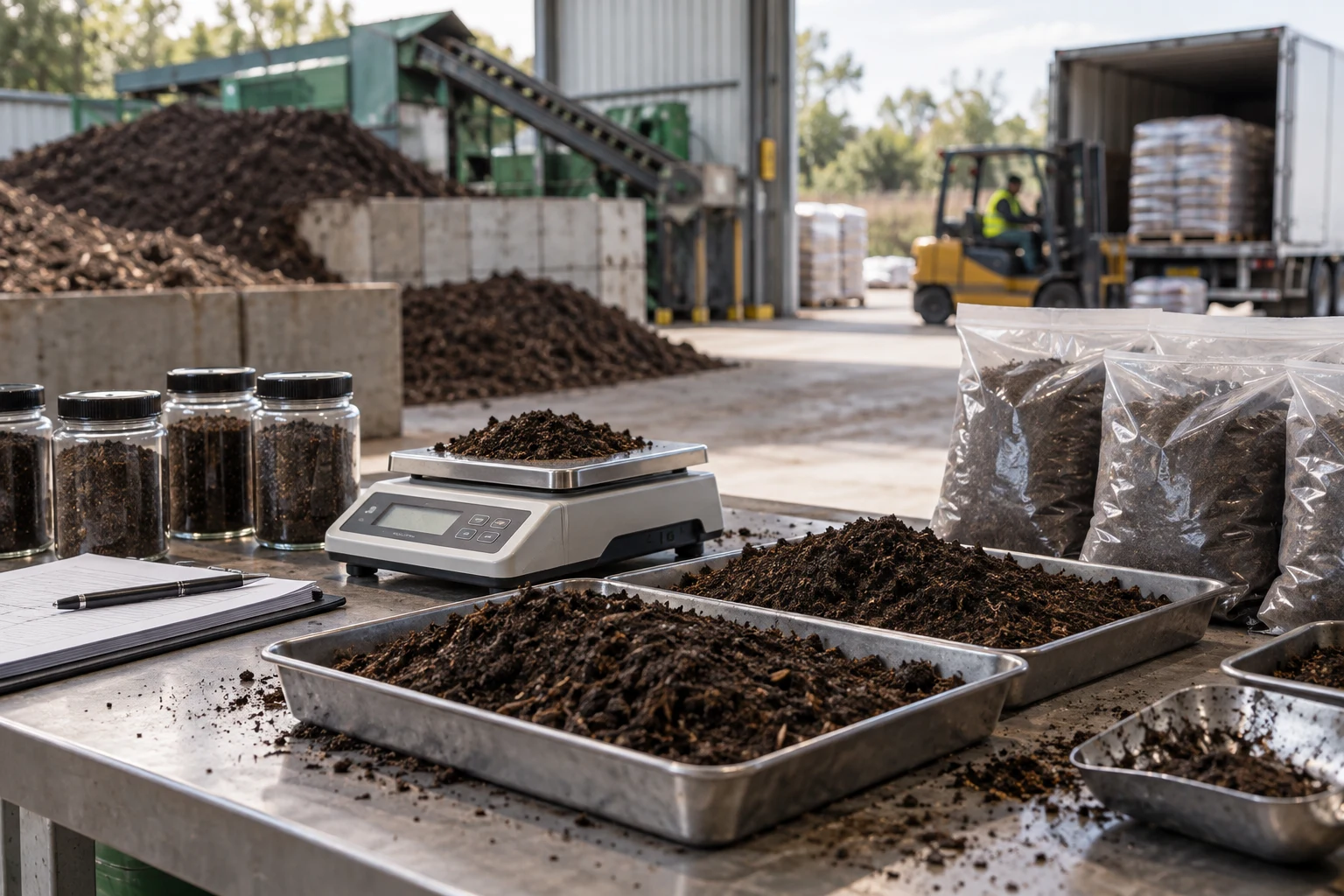
We start the design with your data. Together, we can shape the path from initial discussion to pilot validation and implementation.
Discuss sources, daily and seasonal quantities, collection arrangements and output objectives.
Review space, vehicle access, power and water infrastructure, drainage and operations.
Define process options, module layout and data collection. Test design assumptions through suitable pilot studies.
Phase equipment, automation, site preparation, commissioning and operator training around the project scope.
A machine has a defined processing capacity. The facility approach plans reception, preparation, processing, maturation, quality assessment and logistics as a whole for multiple sources or growing waste streams.
Existing space, equipment and workflows are reviewed to assess module integration. Required components are planned as a system compatible with existing infrastructure.
The number of compost chambers between intake and packing can vary. The example uses 20 litres × 5 chambers = 100 litres of total chamber capacity, excluding intake and packing modules. Expansion also requires conveyor distribution, controls and intake-output handling to support the additional chambers.
This page describes our intended flexible facility and AI-supported process management concept. Technical scope, pilot validation and implementation are defined together during consultation.
Composting process fundamentals: US EPA — Approaches to Composting ↗
Whether planning a new facility, upgrading a site or exploring a shared solution, including the following information helps us assess your needs.