
Quick answer
Compost is a soil amendment made by microbial decomposition of suitable organic material in an aerobic environment. Drying or grinding food scraps alone does not make compost.
Where does transformation begin?
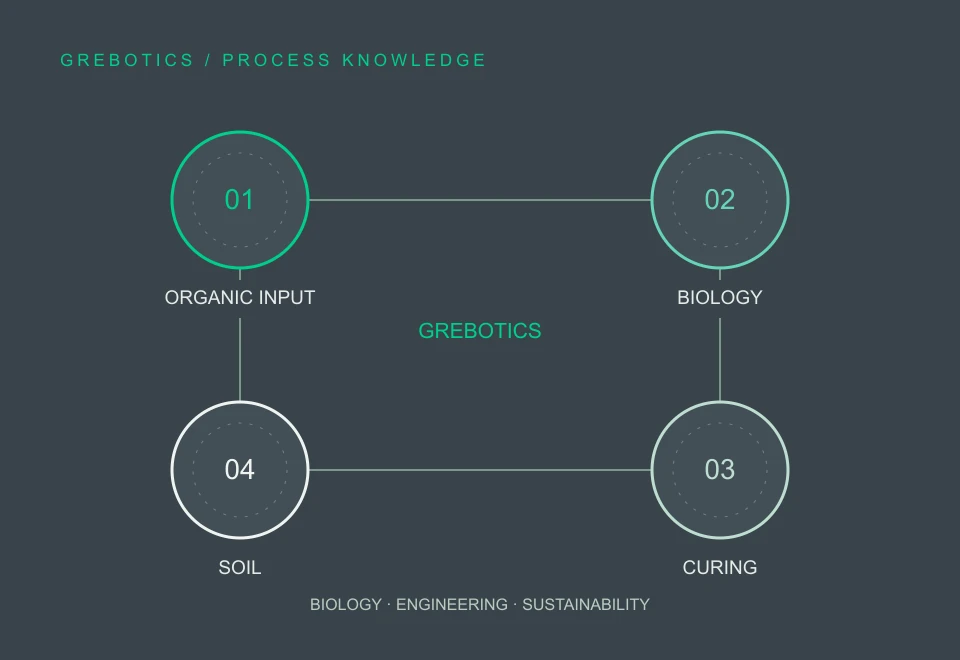
The first operational decision is which residues to separate. Preparation scraps, plate returns and landscape residues have different compositions. Defining the feedstock and excluding packaging, glass and metal determines downstream quality.
Active processing and curing
During active processing, temperature, nutrient consumption and aeration demand change. The intended use of the discharged material must be assessed separately. Discharge does not mean that it is ready for every plant or application.
A compost machine managing biological conversion ↗Planning for an operation
Collection, transport, feeding, processing, curing and use form one connected chain. Assign responsibilities across the chain instead of considering equipment purchase alone. Plan storage and output assessment before installation.
Use in soil
Compost can support soil structure and organic matter management. Potting mixes, landscaping and agricultural applications do not share one dose or quality requirement. Select the use according to output characteristics.
Practical checklist
- Separate residues at source.
- Plan active processing and readiness for use separately.
- Identify the intended use from the start.
Sources and scope
These references support general compost science. GreBotics-specific features are identified as product information.