
Quick answer
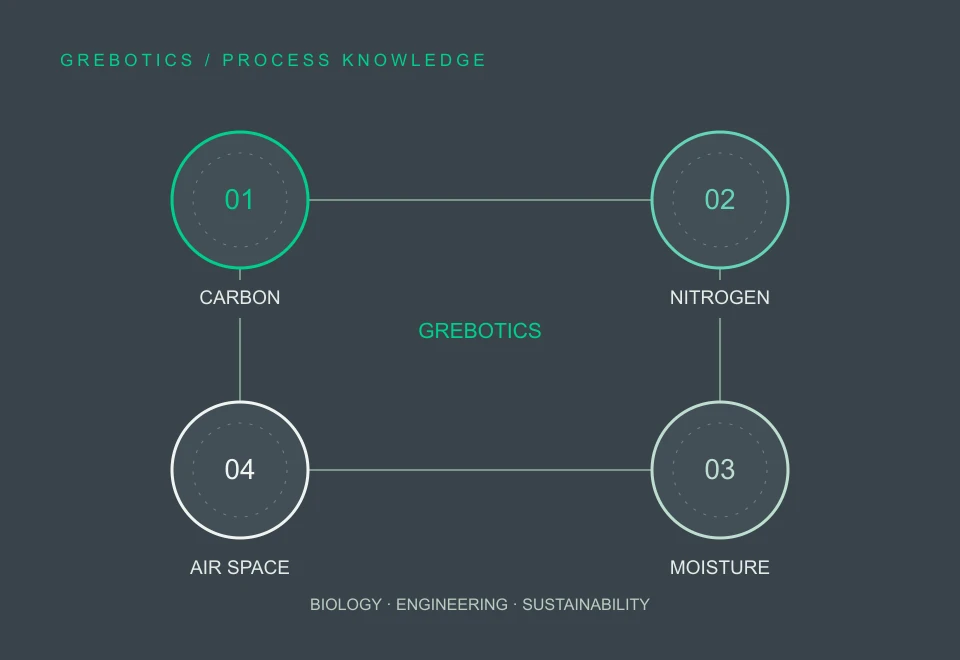
A good compost mixture is not just one ratio. Carbon–nitrogen balance, moisture and airflow must be managed together; there is no fixed bucket recipe for every feedstock.
What does the ratio describe?
Carbon supplies energy and structure; nitrogen supports cellular activity. Cornell describes approximately 30:1 as a general planning reference. This is not a volume ratio: composition and carbon availability matter.
Material groups in an operation
Vegetable scraps, coffee grounds and dry leaves serve different roles. Drier structural components also affect airflow. Not every woody material described in general compost guidance is suitable for S72; use the machine-specific acceptance list.
Explore mixture and process control ↗Managing daily variation
Menus, seasons and production affect mixture composition. Tracking material types and feeding quantities helps staff manage mixture balance. Consistent feeding and small, recorded recipe adjustments make process management easier.
Signs of imbalance
Strong odour, excessive wetness or slow conversion should not be attributed to one cause automatically. Review recent feeds, moisture and airflow. Adjust the mixture with technical support rather than adding arbitrary additives.
Practical checklist
- Track material type and quantity together.
- Do not treat a volume ratio as a C/N ratio.
- Use bulking materials accepted by the machine.
Sources and scope
These references support general compost science. GreBotics-specific features are identified as product information.